Analysis of the Australian Property Market
The Australian property market, a perennial subject of economic discourse, presents a complex tableau of demand, supply, and shifting monetary policy. As you navigate this landscape, it is crucial to appreciate the multifaceted forces at play, moving beyond simplistic narratives to understand the underlying mechanics that drive its performance. This analysis will guide you through current trends, future projections, and the inherent risks that characterise this dynamic sector.
You observe a market not of uniform growth, but a mosaic where different states and territories experience disparate fortunes. While national averages provide a broad brushstroke, the granular reality reveals distinct regional narratives.
Divergent Growth Across Capital Cities
The performance metrics of Australia’s capital cities illuminate this heterogeneity. You should note that certain urban centres are currently experiencing robust appreciation, while others exhibit more moderate trajectories.
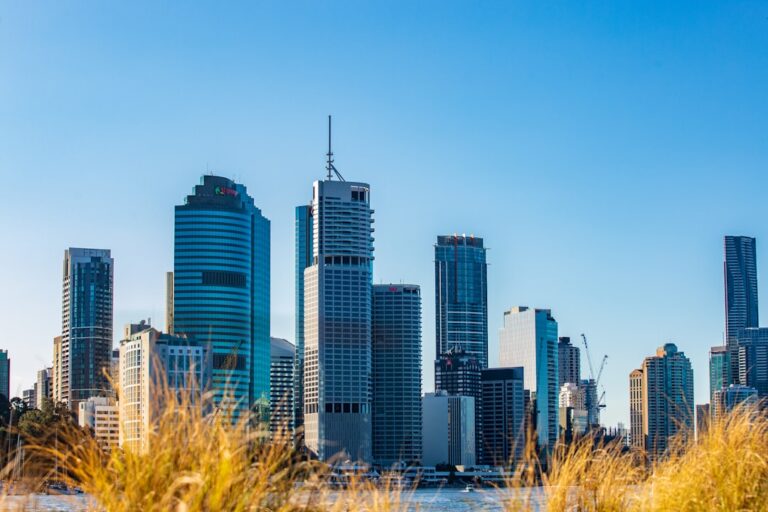
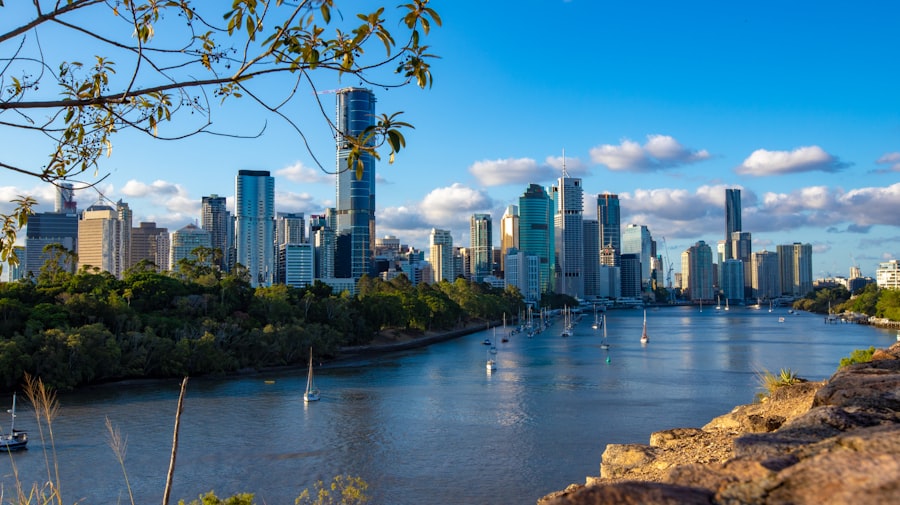
- Perth and Brisbane: Pacesetters of Growth. You will find that Perth, for instance, has emerged as a significant outlier, with KPMG forecasting an approximate 13% increase in property values. Propertyology corroborates this strong performance, also reporting growth exceeding 10%. Brisbane, too, is demonstrating substantial momentum, with forecasts indicating over 10% appreciation. These cities are currently functioning as the vanguard of market expansion.
- Darwin and Adelaide: Steady Ascent. Darwin is also exhibiting notable strength, with projections ranging from 10.5% to 20% growth, signifying a healthy upward trajectory. Adelaide, similarly, is recording a solid increase, with an approximate 8.2% rise in property values. These markets, while not mirroring the explosive growth of Perth or Brisbane, are demonstrating consistent and appreciable gains.
- Sydney, Melbourne, and Hobart: Moderate Expansion. In contrast, markets such as Sydney, Melbourne, and Hobart are exhibiting more moderate growth rates. While still positive, their expansion is less pronounced than their western and northern counterparts. This reflects different demand pressures, affordability constraints, and supply dynamics within these established, more mature markets.
Regional Hotspots: Beyond the Capitals
Your analysis must extend beyond the major metropolitan centres to encompass the vibrancy of regional markets. You will discover that certain regional areas, particularly within Western Australia, are mirroring or even surpassing the growth rates of their capital city.
- Greater Perth and Regional WA. Specifically, areas within Western Australia beyond Perth’s immediate urban sprawl are experiencing significant upward pressure on prices, with some recording growth exceeding 10%. This indicates a broader economic impetus across the state, likely driven by resource sector activity and internal migration patterns. It is important for you to recognise that the property market is not solely a metropolitan phenomenon.
The Supply-Side Conundrum: A Constricting Force
Central to understanding the Australian property market’s resilience, and indeed its upward pressure on prices, is the pervasive issue of supply shortage. You are witnessing a scenario where the availability of housing stock, both for sale and rent, struggles to meet burgeoning demand, creating a fundamental imbalance.
Decadal Decline in Available Inventory
The statistics surrounding available housing stock paint a stark picture. You should recognise that this is not a transient issue but a systemic challenge that has deepened over time.
- Resale Listings and Rental Availability. Over the past decade, a significant contraction in available properties has occurred. You will observe a 33% drop in resale listings, meaning fewer properties are entering the market for purchase. Concurrently, the rental market has experienced an even more dramatic reduction, with a 47% decrease in available rental properties. This severe tightening of supply acts as a powerful upwards force on both sales prices and rental yields.
Underperformance in New Housing Completions
The pipeline for new housing construction is not alleviating this shortage; in fact, it is exacerbating it. You should focus on the gap between intended targets and actual delivery.
- Missed Construction Targets. Projections for 2025 indicate that new housing completions will fall approximately 27% below the target threshold. While the target stands at 240,000 new dwellings, actual completions are anticipated to be closer to 174,000. This substantial deficit prevents the market from catching up to demand.
- Cumulative Housing Shortage. The cumulative effect of these shortfalls is a significant national housing deficit, estimated to be between 200,000 and 300,000 homes. This gap is not a mere statistical anomaly; it represents hundreds of thousands of people potentially struggling to find suitable accommodation.
- Building Approvals Bottleneck. Further illustrating the problem, you will see that building approvals are averaging around 12,000 per month, a figure considerably lower than the target of 20,000 approvals needed to address the housing shortage effectively. This bottleneck in the approval process further stifles the ability of supply to respond to demand.
Demand Drivers: The Engine of Growth

While supply remains constrained, the demand for Australian property continues to exhibit resilience, fuelled by a confluence of factors that reinforce upward price trajectories. You should analyse these drivers to understand the underlying market vigour.
Sustained Rental Price Increases
The rental market serves as a bellwether for underlying demand pressures, and its trajectory indicates continued strength. You can expect sustained upward movement in rental costs.
- Above-Average Rental Growth. Forecasts suggest that rents will continue to rise by approximately 3.5% in 2026-27. This figure is significant given that it surpasses the historical average growth rate of 3%, indicating persistent pressure on tenants and robust returns for investors. This sustained growth in rents can often translate into increased investor confidence in the purchase market.
First-Home Buyer Activity and FOMO
A key demographic driving current demand is the first-home buyer segment, often propelled by a fear of missing out (FOMO). You will observe their impact on transaction volumes.
- Surge in First-Home Buyers. There has been a notable surge in first-home buyer activity. This cohort, often encouraged by government incentives and a desire to enter the market before prices escalate further, contributes significantly to transaction volumes.
- FOMO and Market Momentum. The phenomenon of FOMO, where potential buyers are motivated by the fear that prices will continue to climb beyond their reach, plays a crucial role. This psychological driver can accelerate purchasing decisions, adding momentum to an already active market.
- Increased Sales Volume. Overall sales figures are reflecting this heightened demand, currently standing 3% above the previous year’s levels. This increase in transaction volume underscores a market that, while perhaps not in hypergrowth, is certainly gaining traction.
Industry Confidence Indicator
The sentiment among industry leaders provides another valuable gauge of market direction. You will find that confidence remains overwhelmingly positive regarding future price movements.
- Overwhelming Price Expectations. A significant majority, 87% of industry leaders, anticipate continued price rises. This near-unanimous expectation serves as a powerful indicator of the prevailing belief within the sector that the market’s upward trajectory will endure. Such sentiment can itself influence market behaviour, reinforcing buyer and seller expectations.
Future Outlook: Projections and Influencers
As you look towards 2026, various economic models and expert opinions converge on a forecast of continued growth, albeit with nuances influenced by monetary policy and market specifics.
National House Price Forecasts for 2026
You should consider the specific percentages projected by leading economic analysis firms, which offer a quantitative glimpse into the market’s anticipated performance.
- AMP’s Projections: 5-7% Rise. AMP forecasts a national house price increase of 5-7% for 2026. This projection is underpinned by several key drivers:
- Anticipated Rate Cuts. The expectation of interest rate reductions is a primary catalyst. Lower borrowing costs typically enhance affordability and stimulate demand, acting as a lubricant for the property market.
- Incentive Programmes. Ongoing government incentives designed to support homebuyers, particularly first-home buyers, are expected to continue bolstering demand.
- Persistent Housing Shortage. The fundamental issue of undersupply, as discussed, is a powerful structural factor that will continue to exert upward pressure on prices.
- KPMG’s Forecasts: Stronger Unit Growth. KPMG offers slightly more optimistic national figures, projecting a 7.7% rise for houses and a 7.1% rise for units.
- Despite Rate Uncertainty. Notably, these forecasts are made despite what KPMG acknowledges as ongoing uncertainty surrounding interest rates. This suggests that the underlying market drivers, particularly supply constraints and demand, are considered powerful enough to propel growth even in a less-than-certain monetary environment. The slightly lower forecast for units compared to houses perhaps reflects differences in supply pipelines or investor preferences, but both asset classes are projected for strong appreciation.
The Impact of Interest Rate Movements
The Reserve Bank of Australia’s (RBA) monetary policy decisions stand as a critical determinant of market trajectory. You must understand how changes in the cash rate ripple through the property sector.
- The Power of Rate Cuts. As AMP highlights, rate cuts are generally interpreted as positive for the property market. They reduce mortgage serviceability costs, increasing borrowing capacity and making property ownership more accessible and attractive. This often unlocks latent demand and can stimulate investor activity.
- Market Stability and Certainty. Beyond the direct financial impact, stable interest rates provide certainty for borrowers and lenders. This stability can encourage long-term investment decisions and reduce market volatility, fostering a more predictable environment for property transactions. Conversely, continued rate uncertainty can create a wait-and-see approach among some buyers and sellers.
Risks and Misconceptions: Navigating the Perils
| Metric | Value | Unit | Period | Notes |
|---|---|---|---|---|
| Median House Price (Sydney) | 1,250,000 | AUD | Q1 2024 | Stable growth observed |
| Median Unit Price (Melbourne) | 720,000 | AUD | Q1 2024 | Moderate increase |
| Annual Capital Growth (National) | 5.2 | % | 2023 | Reflects overall market trend |
| Rental Yield (Brisbane) | 4.1 | % | Q1 2024 | Higher than national average |
| Vacancy Rate (Adelaide) | 2.8 | % | Q1 2024 | Indicates tight rental market |
| Number of Property Sales (National) | 320,000 | Transactions | 2023 | Down 3% from previous year |
| Average Days on Market (Perth) | 45 | Days | Q1 2024 | Faster sales compared to 2023 |
While the outlook is generally positive, it is imperative for you to critically assess potential risks and debunk common misconceptions surrounding the Australian property market. A balanced perspective requires acknowledging both its strengths and its vulnerabilities.
Dispelling the “National Crash” Myth
The notion of an impending “national crash” is a persistent narrative, but expert analysis largely refutes this catastrophic outcome. You should approach such predictions with skepticism.
- The “18-Year Cycle” Debunked. The theory of an “18-year property cycle” that inevitably leads to a crash has been widely scrutinised and largely debunked by economic commentators. While property markets are cyclical, their behaviour is influenced by a far more complex array of factors than a simple chronological pattern.
- No Uniform Market Collapse. The prevailing consensus is that a national, across-the-board property market crash is highly improbable. The segmented nature of the Australian market, with its distinct regional performances, suggests that any significant downturn would likely manifest as localised adjustments rather than a systemic collapse. Think of it as a series of different boats on the water, not a single ship going down.
The Walls of Affordability
While a national crash is unlikely, affordability remains a significant structural challenge, particularly in the most expensive capital cities. You should recognise that this acts as an inherent brake on limitless growth.
- Sydney and Melbourne’s Affordability Frontier. In markets like Sydney and Melbourne, price growth is increasingly constrained by affordability ceilings. For many prospective buyers, property prices have reached a “wall” beyond which they cannot reasonably afford to enter or upgrade, even with stable or slightly decreasing interest rates. This can lead to a flattening of growth or slower appreciation in these highly-priced segments. It’s a structural barrier that limits how high the market can climb without fundamentally changing income levels or financing options.
Market Fragmentation vs. Uniformity
It is crucial for you to avoid viewing the Australian property market as a monolithic entity. Its reality is one of fragmentation, where local conditions dictate performance.
- “Fragments, Not Cliffs.” This metaphor aptly describes the market’s variegated nature. Rather than a uniform cliff face where all properties rise and fall in unison, you are observing a collection of distinct fragments, each with its own micro-drivers and trajectory. Some segments may experience robust growth, while others might stagnate or even retract in absolute terms.
- Uneven Market Performance. This fragmentation means that investment decisions and forecasts must be made with a keen appreciation for local market dynamics. Generalisations, while sometimes useful for broad trends, often fail to capture the nuanced realities of specific suburbs or property types. For you, this translates into the need for detailed, hyper-local analysis.
In conclusion, the Australian property market in the lead-up to 2026 appears poised for continued growth, driven by a persistent supply shortage, robust demand from first-home buyers, and the anticipated tailwind of interest rate cuts. While regional variations will persist, and affordability walls will temper exuberance in certain prestige markets, the overall trajectory suggests a resilient and appreciating asset class. Your understanding of these intricate dynamics will be paramount in navigating this complex and ever-evolving landscape.
FAQs
What are the current trends in the Australian property market?
The Australian property market has experienced varied trends, including fluctuating house prices, changes in demand across different cities, and shifts influenced by interest rates and government policies. Recent trends often highlight growth in regional areas and adjustments in metropolitan markets.
How do interest rates affect the Australian property market?
Interest rates significantly impact the Australian property market by influencing borrowing costs. Lower interest rates generally encourage more buyers to enter the market, potentially driving up property prices, while higher rates can reduce affordability and slow market activity.
Which Australian cities are currently experiencing the strongest property market growth?
Cities such as Sydney, Melbourne, Brisbane, and Perth have shown varying degrees of property market growth. Growth rates can differ based on local economic conditions, population growth, and infrastructure developments, with some regional areas also seeing increased demand.
What role do government policies play in the Australian property market?
Government policies, including taxation, grants for first-home buyers, and regulations on foreign investment, play a crucial role in shaping the Australian property market. These policies can either stimulate or cool market activity depending on their focus and implementation.
How does the supply of housing affect property prices in Australia?
Housing supply directly affects property prices; limited supply in high-demand areas tends to push prices up, while increased supply can help stabilise or reduce prices. Factors influencing supply include construction rates, zoning laws, and availability of land.